

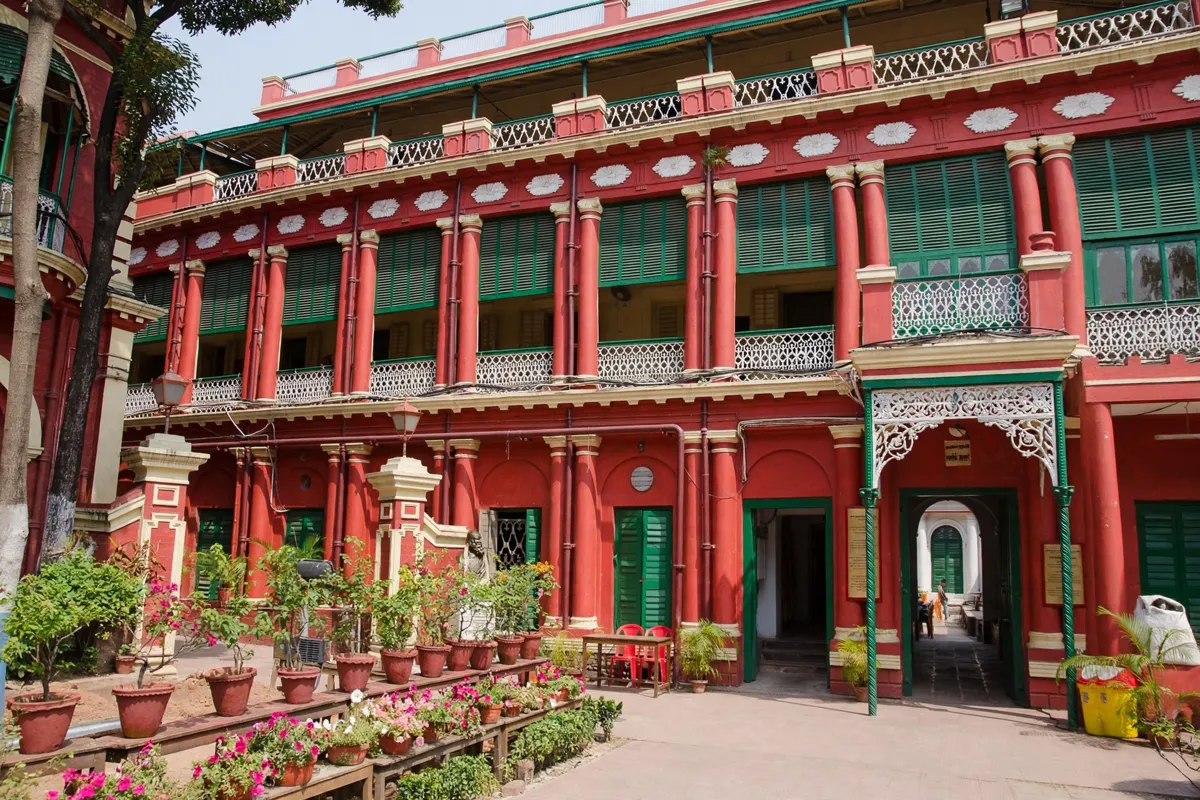
Jorasanko Thakur Bari in Kolkata is the ancestral home of the Tagore family and now houses the Rabindra Bharati Museum. The heritage site traces Rabindranath Tagore’s life and the family’s cultural legacy; Atithi Inn offers rooms for a Jorasanko Thakur Bari visit, about a 24-minute walk or 10-minute drive away.
- Address: 6/4 Dwarakanath Tagore Lane, Kolkata 700007.
- Museum hours: Open Tuesday to Sunday; closed Monday
- General admission: ₹50 for visitors above age 3.
- Nearest metro: Girish Park.
What Jorasanko Thakur Bari commemorates
Jorasanko Thakur Bari commemorates the Tagore family and the cultural history connected with its ancestral home. Rabindranath Tagore was born there in 1861, spent much of his life there and died there, according to Rabindra Bharati University.
The family’s residence took shape over generations. Nilmoni Tagore built a residence at Jorasanko in 1784; Dwarakanath Tagore later expanded the family house and built the adjacent Boithak Khana Bari in 1823. Rabindra Bharati University was founded at Tagore’s Jorasanko residence on May 8, 1961, to advance learning and culture, particularly music, dance and drama.
What visitors can see at the house and museum
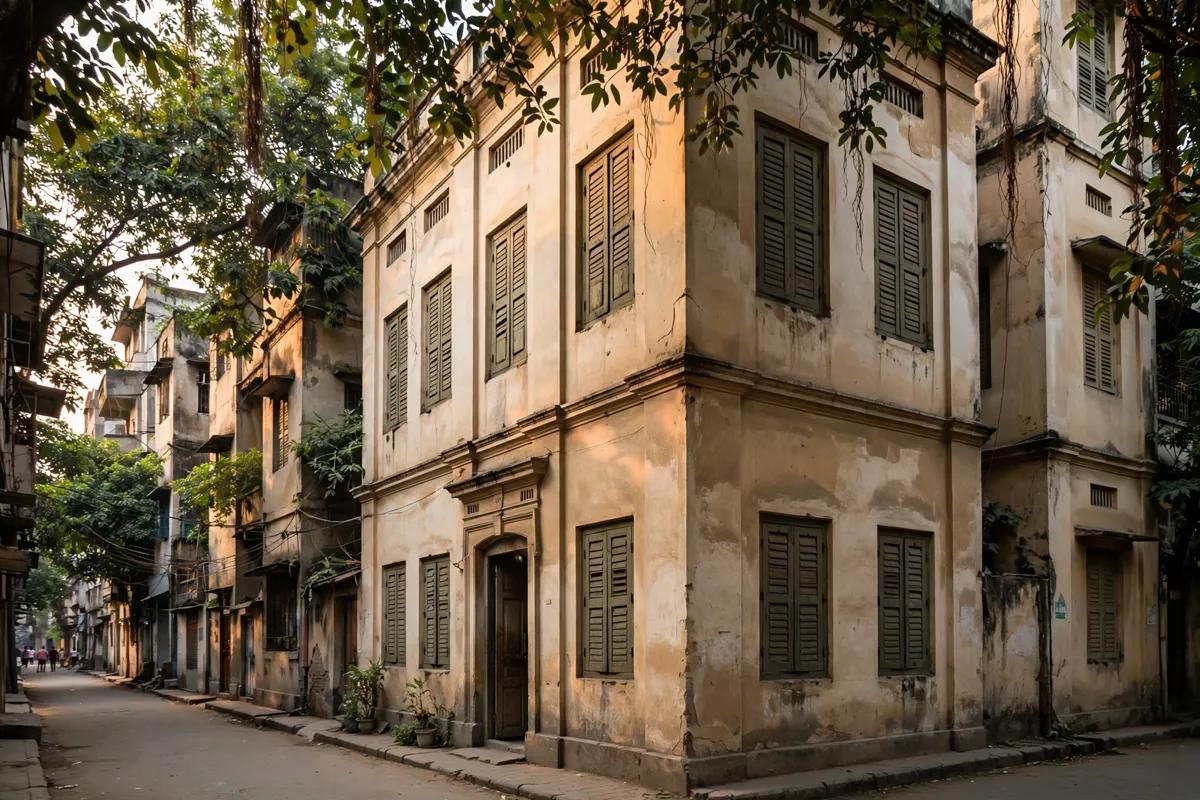
The Rabindra Bharati Museum brings together material on prominent Bengal Renaissance figures and the Tagore family. Its collections cover Dwarakanath, Debendranath, Rabindranath, Abanindranath and Gaganendranath Tagore, alongside Bengal School paintings and portraits.
Four galleries focus on Rabindranath Tagore’s visits and relationships with Japan, China, the United States and Hungary. If you’re planning a wider day around the city, a central-city route through Kolkata can help you put this visit into a broader itinerary.
Tickets, hours and visitor rules
The museum publishes several admission rates, and photography has separate rules and charges. Check the official site before you go, as hours, prices and visitor arrangements can change.
Opening hours
- Tuesday to Sunday: 10:30–16:30
- Monday: closed
Last checked November 2026. Hours can change on holidays and for special events.
- Admission is ₹20 for Indian and SAARC students, ₹50 for general visitors above age 3, and ₹500 for visitors from countries outside SAARC.
- Entry is free for physically challenged visitors, street children and students up to age 3.
- Still-photography coupons cost ₹50 for visitors from India and SAARC countries, and ₹100 for visitors from other countries. Photography is allowed only outside the museum building and in the courtyard; it is prohibited inside the museum.
- Free guide service is available subject to availability.
Rabindra Bharati University gives the museum’s hours as 10:30 am to 5 pm, with the last ticket sale at 4:30 pm. The Ministry of Culture’s directory and the university page differ on closure-day information, so confirm the day’s arrangements before setting out.
How do you get to Jorasanko Thakur Bari?
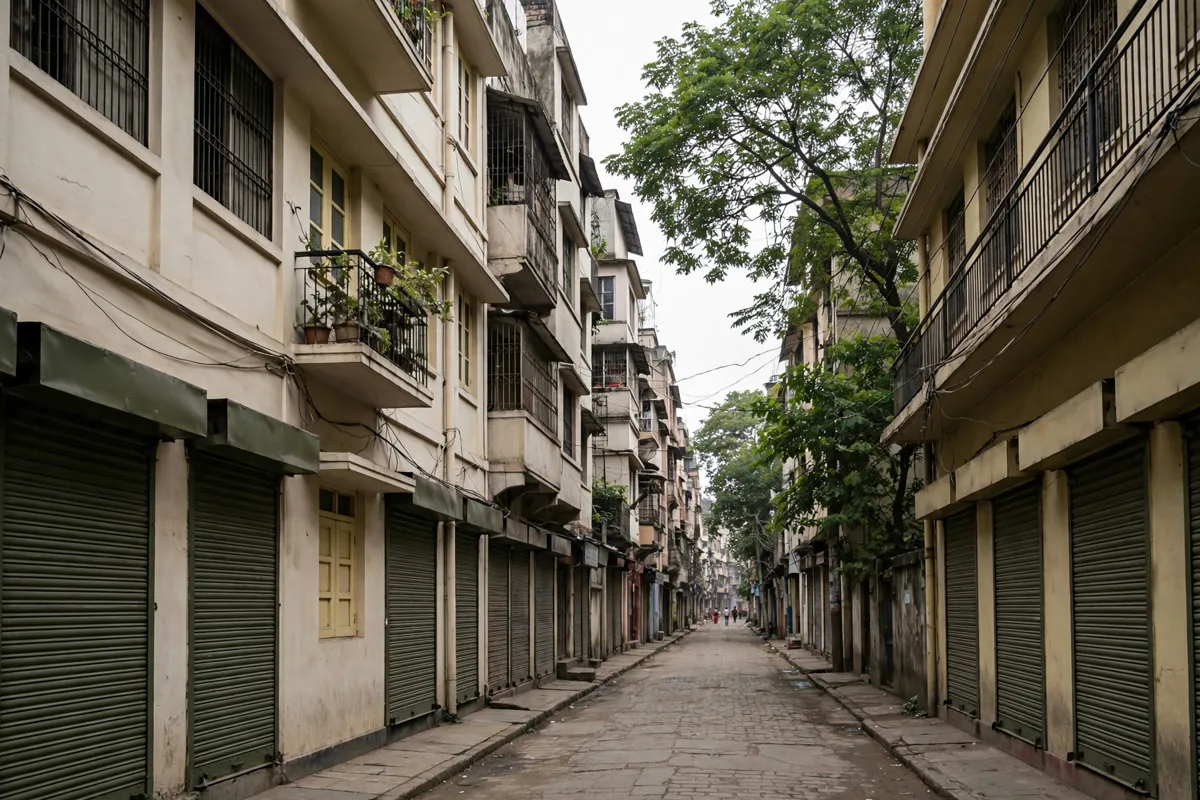
Girish Park Metro Station is the nearest metro station to Jorasanko Thakur Bari, while Sealdah and Howrah are the closest railway stations named by the West Bengal Department of Tourism.
If you’re using public transport for the rest of your Kolkata plans, the city’s metro, rail and local transport options are useful to consider alongside the nearest metro stop. Kumartuli, Marble Palace and Sovabazar Rajbari are also among the destinations near Jorasanko Thakur Bari.
FAQs
Who lived at Jorasanko Thakur Bari?
It was the ancestral home of the Tagore family. Rabindranath Tagore was born there and spent much of his life there.
What is the Rabindra Bharati Museum known for?
The museum presents collections connected with the Tagore family and Bengal Renaissance figures, including paintings and portraits, as well as galleries about Tagore’s ties with four countries.
Can you take photographs inside the museum?
No. Photography is prohibited inside the museum building, though it is allowed outside and in the courtyard with a still-photography coupon.